Cleaning price calculator (UK)
See what cleaners typically charge for a job in your area, and how your price compares.
What cleaners typically charge
How does your price compare?
Typical ranges come from UK price guides published in 2026 (for example Housekeep, Fantastic Services and Bark for homes, MyJobQuote for offices). There is no official figure for what cleaners charge, guides differ, and agencies usually charge more than independents. Some figures may include VAT. Hours are our planning estimates. Use this as a guide, then look round the job before you quote.
Why not just charge by the square metre? (tap)
Pros
- Speed. You can give a ballpark figure on the phone or by email.
- Simple. Clients find it easy to understand and compare.
Cons
- It can under-quote. An empty storeroom and a busy open-plan office of the same size take very different amounts of time.
- It hides washrooms and kitchens. These take far more time per square metre than offices.
- It can eat your margin. If the building is dirtier than expected, a flat rate means unpaid hours.
The three-step blueprint
- Benchmark. Use the calculator for a baseline price.
- Adjust. Think about how the layout, number of toilets, traffic and access change the time needed.
- Finalise. Walk the site with the checklist, then confirm your price.
The golden rule: software cannot see inside a building. A calculator gives a starting point. It cannot spot heavy stains, a restricted entry system or a washroom that is used all day.
An average home in England is around 95 m², typically a 3-bedroom house (English Housing Survey). The preset is a starting point, not a rule.
A rushed clean takes less time, but it is the clean your client is paying for. Price to the standard you will actually deliver.
Your rate and costs
Who is doing the work?
If you enter a monthly supplies figure, it replaces the percentage. See the Supplies cost tab to work out your real cost per use.
Overheads cover insurance, admin, travel and equipment. Business profit is money left in the business, on top of your own pay.
Time a real clean and enter your own speed. It is the most important number here. Leave blank to use the building type's assumption.
Your baseline estimate
Baseline only. It cannot see heavy stains, how many washrooms are really in use, or restricted access. Visit the site and finish your quote with the checklist.
Same floor area, different building
How does this compare with typical UK prices?
Typical rates come from UK price guides published in 2026 and are a guide only. Your price should cover your own costs first.
How are the hours worked out? (tap)
- Cleaning speed. Each building type has an assumed speed in floor area per cleaner hour, at a steady professional pace (not rushing, not slow). You can replace it with your own.
- Toilets and kitchens. Added separately: 7 minutes per toilet and 10 per kitchen, more in medical, care and food buildings.
- Site conditions. Easy sites take 10% less time. Difficult sites take 15% more.
- Standard of clean. Basic takes 15% less time. Thorough takes 25% more.
- Travel. Any paid travel time per visit is added.
These are planning assumptions, not industry standards. Replace them with your own timed results.
On-site walkthrough checklist
Take this to the visit. Tick as you go, or print it.
What your supplies really cost
The price of the bottle is not the cost of cleaning. The fair comparison is the cost per litre of ready-to-use solution, because a concentrate is diluted and a ready-to-use spray is not.
- Ready-to-use sprays are convenient, but you pay for the water in the bottle.
- Concentrates are diluted at the dilution on the label, so one bottle makes many litres of solution.
- Dissolvable tablets make a full spray from one tablet, which also cuts plastic bottles and storage space. For example, one pack of Q-Eco MultiTab makes 7.5 litres of spray (one tablet per 750ml, per the product listing), about £1.21 per litre at our current price.
Quality of clean depends on the right product, the correct dilution and a trained cleaner. We can't promise one product cleans better than another, but you can see what each costs per use. Compare like with like: a disinfectant and a general cleaner do different jobs.
Cost per litre at the label dilution
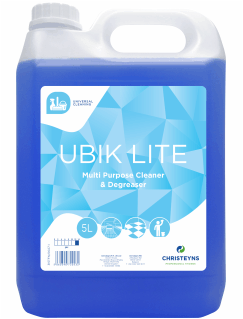
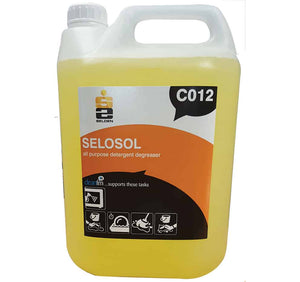
Choose a job for each 5 litre concentrate. Prices are our current prices excluding VAT, and the dilutions come from the product data sheets.
We read a dilution of 1:80 as 1 part product in 80 parts of finished solution (1.25% product), the cautious reading. Always check the label for your own job, because heavy soiling needs a stronger mix. A 10 litre mop bucket is used as the example.
Ask us for dilution rates and a cost-per-use comparison for the products you use now.
Trade sizes, starter packs and a personal service. No minimum order, and prices show no VAT added.
This calculator gives a general estimate for planning. It is not a quote, a guarantee of profit, or financial, tax or legal advice. Rates and rules can change, so check the latest on GOV.UK.
Calculator version 3 (Quick check and Detailed)